
If you’re looking to drive a semi-trailer truck professionally in Manitoba, you’ll need to complete the Manitoba MELT program before you can get behind the wheel legally. This mandatory training requirement ensures that every new Manitoba Class 1 driver has the essential skills and knowledge to safely operate a semi-trailer on public roads.
This guide breaks down everything you need to know about mandatory entry-level training in Manitoba—from program structure and eligibility to funding options and the road test booking process.
Overview of the Manitoba MELT Program
The MELT course (Mandatory Entry-Level Training) is a standardized training program that Manitoba requires all new Class 1 licence applicants to complete. The program was introduced to improve safety standards and ensure that every professional truck driver entering the industry meets a consistent competency threshold.
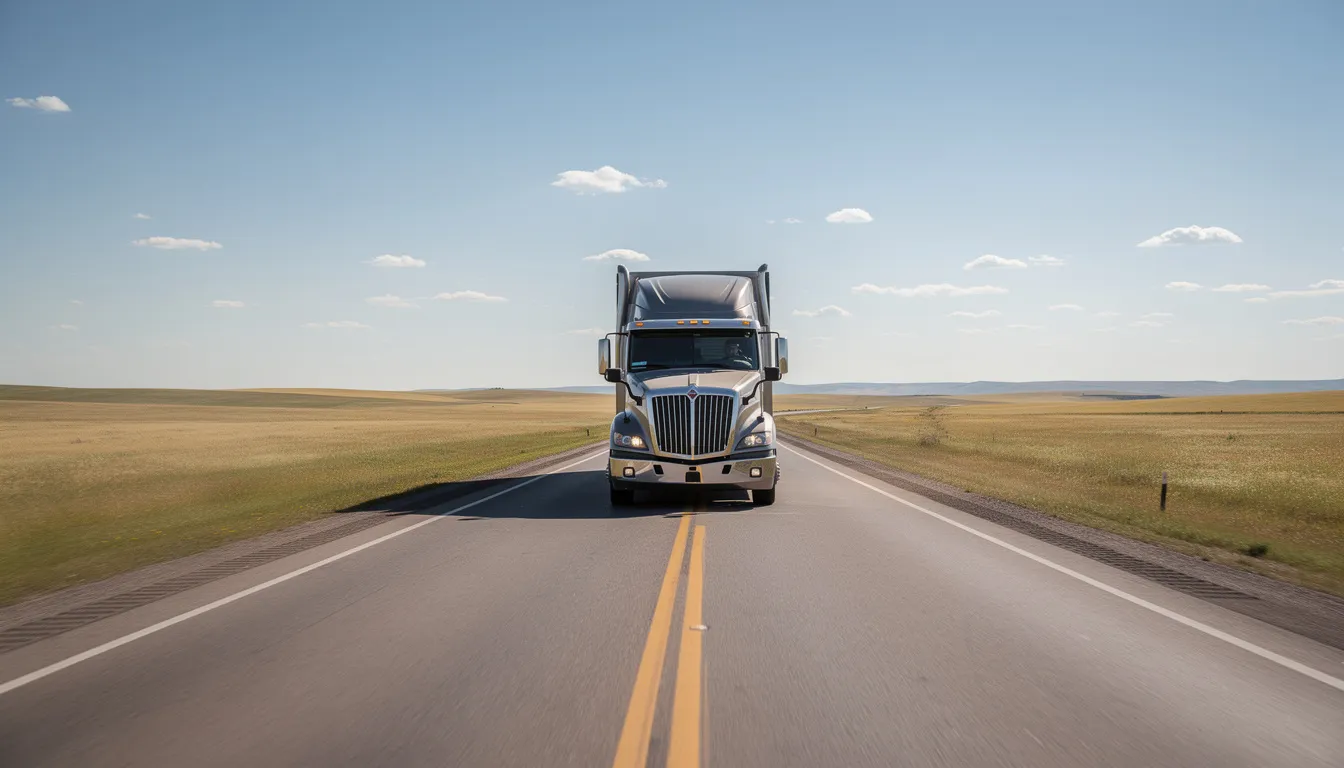
Here’s what you need to know about the program at a glance:
Purpose: MELT exists to protect all road users by ensuring new commercial drivers possess essential knowledge of regulations, vehicle systems, defensive driving, cargo securement, and trip planning
Start date: The mandatory training requirement came into effect on September 1, 2019, aligning Manitoba with other Canadian jurisdictions, including Ontario, British Columbia, Alberta, and Saskatchewan
Duration: The program consists of 121.5 hours of standardized training covering theory, practical exercises, and on-road instruction
Who it applies to: Anyone applying for a new Class 1 licence on or after September 1, 2019, must successfully complete mandatory training before booking a road test
Exemptions: Existing Manitoba Class 1 licence holders who received their licence before September 1, 2019, are fully exempt from MELT and any retesting requirements
Legal status: Without MELT completion on your MPI file, you cannot book a Class 1 road test—this applies to first-time applicants and those retesting after a failure
Class 1 Licence and MELT Requirements in Manitoba
A Manitoba Class 1 licence authorizes you to operate a semi-trailer truck, tractor-trailer combinations, and any vehicle permissible under lower licence classes, such as Class 3 or Class 5. This includes vehicles equipped with air brakes and manual transmissions.
Understanding the connection between MELT and your Class 1 licence is essential before you enroll in any training program:
MELT as a prerequisite: If you’re applying for a Class 1 licence on or after September 1, 2019, you must complete MELT before MPI will allow you to book your Class 1 road test
Age requirement: You must be at least 18 years old to obtain a Class 1 licence in Manitoba
Existing licence: You need a valid full-stage Manitoba Class 5 licence (not an intermediate or learner’s permit)
Medical fitness: A valid MPI medical fitness certificate is required prior to training, screening for vision, hearing, cardiovascular health, and other conditions that could affect safe operation
Permits required: Before training begins, you’ll need a Class 1 Authorized Instruction Permit and an Air Brake Learner’s Permit
First-time vs. upgrading: Whether you’re a first-time Class 1 applicant or upgrading from another class (such as Class 3), you must complete MELT if you didn’t hold a Class 1 licence before September 1, 2019
Previous experience driving farm trucks or heavy equipment does not exempt you from the mandatory training programs—the MELT requirement applies regardless of your background.
Program Structure: 121.5 Hours of MELT Training
The 121.5-hour MELT program is divided into three distinct components, each designed to build your driving skills progressively. Most students complete the program in approximately three to four weeks of full-time training, though some providers offer part-time schedules that extend the timeline.
Classroom Training (40.5 Hours)
The theory component covers the essential knowledge every professional truck driver needs:
Federal and provincial regulations, including the National Safety Code
Hours of service requirements to prevent fatigue-related incidents
Vehicle inspection protocols and documentation
Cargo securement standards per CVSE requirements
Defensive driving principles and hazard anticipation
Trip planning covering routes, weather considerations, and fuel efficiency
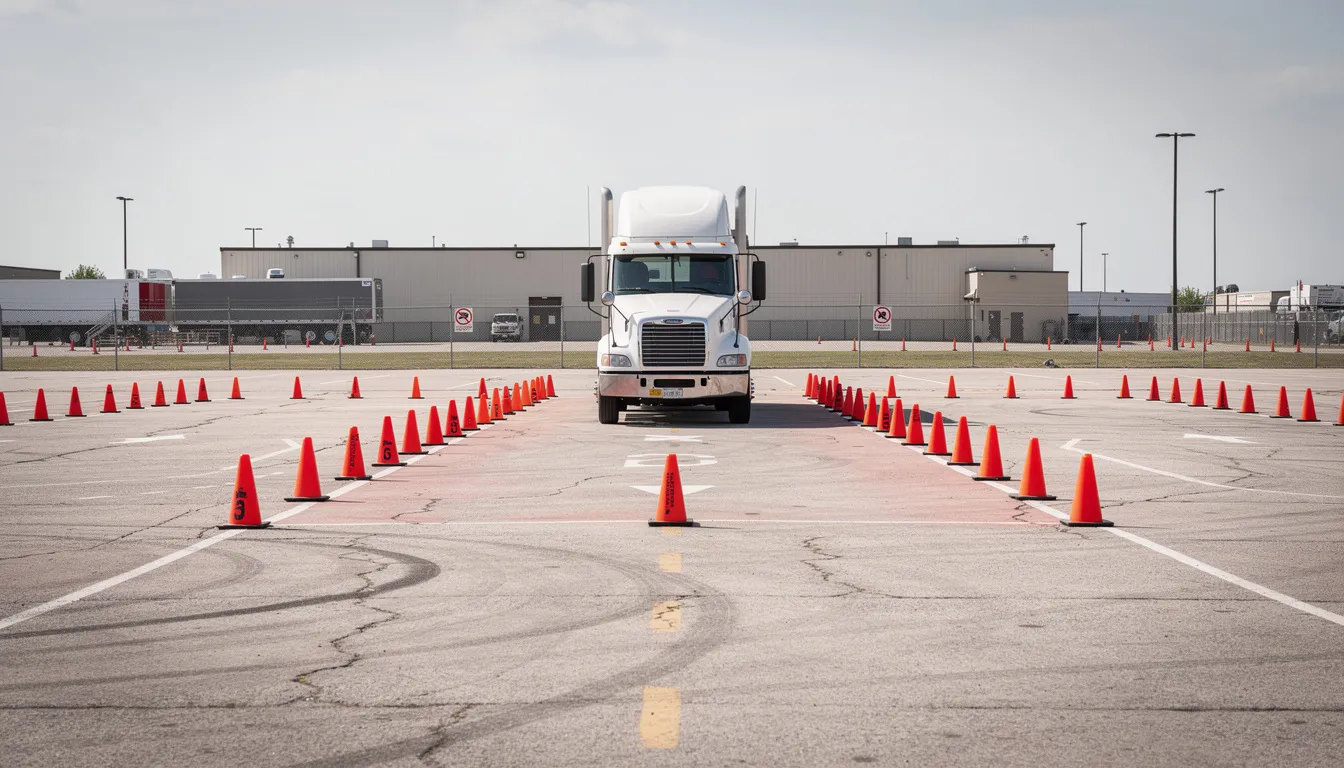
Yard Training (40 Hours)
Practical training in a controlled, off-road environment builds foundational vehicle control:
Comprehensive pre-trip inspection procedures following the MPI checklist
Trailer coupling and uncoupling sequences
Precision backing maneuvers, including alley docks and offset parking
Air brake system checks via standardized adjustment and leak-down tests
Basic maneuvers in confined spaces to develop muscle memory
In-Cab/On-Road Training (41 Hours)
The on-road portion immerses you in real driving conditions:
Highway driving at speed with proper gear shifting (10- or 13-speed manuals)
City navigation through intersections and turns
Cornering dynamics accounting for trailer swing
Lane changes with mirror scanning protocols
Hazard perception through simulated emergencies
Space management and following distances are scaled to load weights
All 121.5 hours must be completed with an MPI-registered driving school. Partial training, informal instruction, or experience gained outside an approved program does not count toward MELT completion.
Other Approved Training: 244-Hour Program and Alternatives
While MELT is the minimum requirement, there are other pathways to satisfy Manitoba’s mandatory training programs for Class 1 applicants.
Program Type | Hours | Meets MELT Requirement? | Best For |
|---|---|---|---|
MELT | 121.5 | Yes | Meeting minimum legal requirements |
244-Hour Professional Truck Driver Training | 244 | Yes | Comprehensive career preparation |
20-36 Hour Refresher Courses | 20-36 | No | Existing drivers are improving specific skills |
Key points about alternative training options:
244-hour course: The Entry-Level Professional Truck Driver Training course is recognized as meeting Manitoba’s MELT requirement for Class 1 applicants
Pre-September 2019 completers: Students who finished the 244-hour course before September 1, 2019, can satisfy the MELT requirement, but their school may need to update MPI records to show MELT equivalency
Shorter courses don’t qualify: Programs of 20 hours, 36 hours, or other refresher/add-on Class 1 courses do not replace MELT for new Class 1 licence seekers
Refresher value: Additional courses like 20-hour or 36-hour programs are useful for experienced drivers who already hold a Class 1 or have completed MELT but want to improve skills such as shifting, backing, or air brake inspections
Approved MELT Training Providers and Tuition
MELT can only be delivered by registered Class 1 truck driving schools that meet Manitoba Public Insurance and provincial standards. Not every driving school offering commercial training is authorized to provide MELT instruction.
What to Look for in an Approved Provider
Experienced instructors who have completed MPI-approved preparation courses covering curriculum delivery and in-cab coaching
Modern tractors and 53-foot trailers
Strong emphasis on manual transmissions and air brake systems
Facilities that support both yard training and classroom instruction
Proven track record with documented success rates (many schools achieve 70-90% first-time pass rates)
Tuition and Costs
Tuition fees vary by school and typically range from $5,000 to $8,000 for the 121.5-hour MELT program. Factors affecting cost include:
Equipment quality and instructor experience
Course length (121.5 hours vs. 244 hours)
What’s included in the package (textbooks, medicals, MPI road test fees)
Location (schools in Brandon, Winnipeg, Steinbach, Winkler, Swan River, and other areas may have different pricing)
Funding Options
Several funding sources may help offset the cost of your MELT course:
Canada-Manitoba Job Grant (up to $10,000 per trainee for employers)
Manitoba Jobs and Skills Development programs
First Nations Bands sponsorship
Manitoba Metis Federation (MMF) funding
Workers’ Compensation Board (WCB) retraining
Employer sponsorships in the trucking industry
Before you enroll, verify that your chosen school is a registered MELT provider by contacting MPI’s Driver Training Permit Unit at 204-985-8063. Ask about payment plans, what’s included in tuition, and available funding support.
Road Tests and Booking Process After MELT
Manitoba Public Insurance will not allow a Class 1 road test to be booked unless MELT or an approved equivalent is recorded as completed on your driver’s MPI file. This process ensures that all applicants have met the standardized training requirement before being eligible for testing.
The typical sequence after completing your training:
School reports completion: Your driving school electronically notifies MPI that you’ve completed MELT
Processing time: Allow up to three business days for MPI to process and update your file
Book your test: Contact MPI or use their online services to schedule your Class 1 road test
Test duration: MPI road tests typically last 45-60 minutes and evaluate pre-trip inspection skills, city and highway driving, and required maneuvers
Important considerations for the testing process:
This rule applies to first-time Class 1 applicants and those retaking the test after a fail or expired booking
Many MELT packages include one MPI Class 1 road test attempt
Additional test attempts cost approximately $135 and are the student’s responsibility
You cannot book or rebook a Class 1 road test without MELT completion in your file
Updates to the Class 1 Road Test Requirements
A significant policy update took effect on November 1, 2024, adding mandatory extra instruction requirements for applicants who fail multiple Class 1 road tests.
New Requirements After Multiple Failures
Attempt Number | Requirement |
|---|---|
1st, 2nd, 3rd | Standard booking process |
4th and beyond | Five hours of professional instruction are required before each booking |
Here’s what you need to know about these changes:
After three failed Class 1 road tests (attempts made under the MELT regime starting September 1, 2019), you must complete at least five hours of additional professional instruction before booking another test
From the fourth attempt onward, five hours of professional instruction are required before each subsequent booking
These requirements apply to all current Class 1 applicants, regardless of which MELT provider or program they completed
Instruction must be obtained through a recognized instructor and cover the weak areas identified in previous tests
The policy aims to improve safety and test readiness by ensuring drivers receive focused coaching before retesting
New Manitoba Residents with Out-of-Province or U.S. Licences
If you’re moving to Manitoba with an existing commercial licence, understanding the transfer process and potential MELT implications is critical.
Transfers from MELT Jurisdictions
Drivers from implementing mandatory training programs jurisdictions—Ontario, British Columbia, Alberta, and Saskatchewan—may be eligible to transfer their existing Class 1 directly to a Manitoba Class 1, subject to:
Proof of Manitoba residency
MPI verification of your existing licence
Meeting any additional provincial requirements
Transfers from Non-MELT Jurisdictions
Drivers from Canadian provinces or U.S. states without mandatory training programs face different requirements based on experience:
Experience Level | Requirement |
|---|---|
24+ months | Potential waiver from MELT |
12-24 months | May qualify for a waiver if passing the Manitoba Class 1 test within two attempts over 12 months |
Under 12 months | Full MELT completion plus knowledge and road tests required |
International Drivers
No commercial licence reciprocity exists for drivers moving from outside Canada and the United States. International drivers must follow Manitoba’s full licensing and training path, including completion of MELT.
New residents should contact MPI or a local training provider soon after arrival to understand which documents are required and whether they must complete MELT or partial training.
Choosing Between MELT and Longer Class 1 Programs
When selecting your training path, consider both your current experience level and your career goals in the trucking industry.
MELT (121.5 Hours) vs. 244-Hour Program
Factor | MELT (121.5 Hours) | 244-Hour Program |
|---|---|---|
Legal status | Meets minimum requirement | Exceeds minimum requirement |
Duration | 3-4 weeks full-time | 6+ weeks full-time |
Cost | $5,000-$8,000 | Higher investment |
Coverage | Core competencies | Advanced topics (border crossing, skid control, extended observation hours) |
Who Should Choose MELT
The 121.5-hour program may be sufficient if you have:
Previous experience with farm trucks or heavy equipment
Class 3 straight truck experience
Familiarity with manual transmissions
Budget constraints or time limitations
Who Benefits from Extended Programs
The 244-hour or similar comprehensive programs often work better for:
Brand-new drivers with no commercial vehicle experience
Those pursuing long-haul or specialized freight careers
Applicants who want more driving and observation hours
Students seeking enhanced employability in a competitive market
Consider your career goals—local work, long-haul trucking, or specialized freight—and available funding when making your decision.
Additional and Refresher Training Options
MELT completion is just the beginning of your career as a professional truck driver. Ongoing training helps you maintain excellence and adapt to changing industry requirements.
Post-MELT Refresher Courses
Shorter targeted programs (20-hour or 36-hour) serve specific purposes:
Extra practice in backing, shifting, or air brake knowledge test preparation
Focused coaching for drivers who completed MELT but failed an MPI road test
Skill-sharpening before starting a new driving position
Preparation for the air brake test or air brake endorsement renewal
Specialized Non-Licence Training
Beyond basic licensing, consider courses that complement your MELT foundation:
Hours of service compliance training
Load securement certification
Winter driving techniques
Advanced defensive driving
Electronic logging device (ELD) operation
These programs help professional drivers stay compliant, improve safety, and advance their careers beyond the initial entry-level training required by MELT.
How to Get Started with the Manitoba MELT Program
Ready to begin your path to a Class 1 licence? Follow this step-by-step process to move from initial inquiry to booking your road test.
Pre-Enrollment Checklist
Before contacting any school, confirm you meet these eligibility requirements:
[ ] Minimum age of 18 years
[ ] Valid full-stage Manitoba Class 5 licence
[ ] Ability to pass medical fitness requirements
[ ] No disqualifying conditions on your driver’s abstract
Steps to Complete MELT
Obtain your driver’s abstract from MPI to identify any issues that need resolution
Complete your medical examination to avoid delays once training begins
Research registered MELT schools and verify their MPI registration
Explore funding options through government programs, employers, or sponsoring organizations
Enroll in your chosen program (plan for three to six weeks, depending on course length)
Acquire required permits (Class 1 Authorized Instruction Permit and Air Brake Learner’s Permit)
Complete all 121.5 hours of classroom, yard, and in-cab instruction
Wait for MPI file update (up to three business days after school reports completion)
Book your Class 1 road test through MPI online or phone services
Questions to Ask Potential Schools
When evaluating training providers, get answers to these key questions:
Are you registered with MPI to deliver MELT?
What is the class schedule (full-time vs. part-time)?
What equipment will I train on (tractor type, trailer length)?
What is your first-time pass rate on MPI road tests?
Is an MPI road test attempt included in tuition?
Do you assist with funding applications?
What happens if I need additional practice hours?
Your path to a rewarding career in the trucking industry starts with completing the Manitoba MELT program. The standardized training ensures you graduate with the skills to safely operate a semi-trailer and meet employer expectations from day one.
Take the first step today by confirming your eligibility, researching registered training providers, and exploring available funding. With the right preparation and commitment to excellence, you can obtain your Class 1 licence and begin your career as a professional truck driver.